
 EN
EN
 Italiano
English
EN
Italiano
English
Italiano
English
EN
Italiano
English
Children spend hours in closed environments where viruses and bacteria spread easily. Our atomized liquid technology protects the space with regular, silent cycles outside lesson hours, with no health risks.
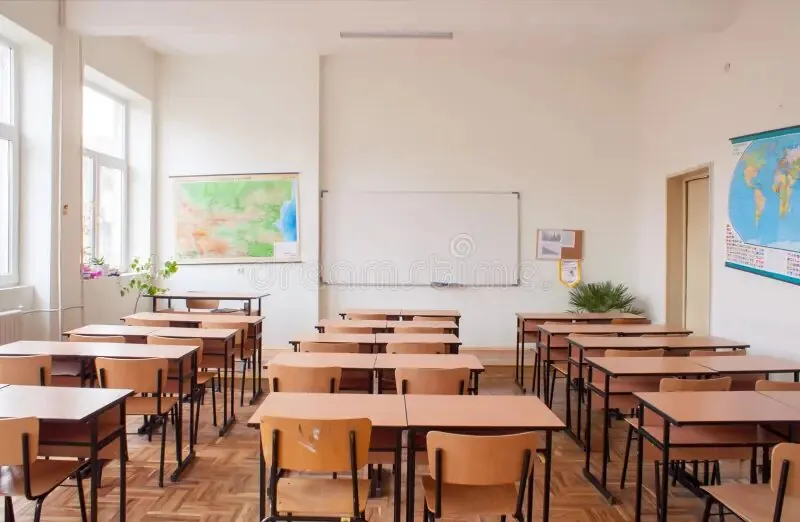
Schools and nurseries are high-risk environments for contagion: many children in closed spaces, often insufficient ventilation, an immune system still developing. Guidance from Italian regional health authorities notes that it is precisely in closed, often overheated spaces with many children that microorganisms spread more easily, and that socialising with peers is the main route by which pathogens circulate (source: ASUGI Friuli Venezia Giulia, prevention department). Environmental hygiene, together with handwashing, remains among the most recommended prevention measures.
Talk to an expert arrow_forwardClassrooms host many children for consecutive hours: the risk of airborne spread is very high.
Many school buildings have outdated systems or windows that do not ensure adequate air circulation.
Children are more vulnerable to pathogens. Preventive protection makes a difference to health and school absences.
The atomized liquid is completely non-toxic. No risk for children, teachers or pets.
The diffusion reaches every corner of the classroom, even the areas furthest from the device.
Healthier environments translate into fewer seasonal illnesses and fewer days of absence for children and staff.
Communicate to parents a concrete commitment to the health of their children, strengthening trust in the school.
In Italy, nursery hygiene is set by regional regulations on minimum cleaning requirements, by Regulation (EC) 852/2004 on HACCP where an internal canteen is present, and by Legislative Decree 81/2008, which requires a Risk Assessment Document (DVR) covering biological risk.
Each Italian region sets its own minimum operating requirements for nurseries and micro-nurseries, including the frequency of cleaning for surfaces, toys and furniture. Where an internal canteen is present, the operator applies an HACCP self-control plan that also covers sanitization of surfaces in contact with food. The DVR, mandatory for any workplace, must also assess the biological risk linked to many children sharing enclosed spaces: periodic environmental sanitization is one of the most common mitigation measures indicated by nursery hygiene guidelines.
The device diffuses the sanitizing liquid in atomized form, reaching air and surfaces, including toys and fabrics, without leaving residue. Cycles run outside children's attendance hours and do not require prolonged airing afterwards.
The cycle is scheduled for hours when the classroom is empty, for example at the end of the day or during the lunch break, and starts independently or automatically. The atomized liquid reaches every corner of the space, including surfaces that are hard to clean by hand such as toys, rugs and fabrics, without leaving chemical residue to remove. No prolonged airing is needed before children return to the classroom: normal ventilation is enough. It is the same principle we apply to other high-traffic enclosed environments, from ambulances to car sharing vehicles: an automatic cycle that fits into the facility's routine without requiring dedicated staff.
Yes. The sanitizing liquid is a Medical-Surgical Device (Presidio Medico Chirurgico) registered with the Italian Ministry of Health, produced by a third-party company, and is non-toxic. It does not leave persistent residue on surfaces. Technical and safety data sheets available on request.
Yes. The cycle is designed for mixed surfaces: plastic, fabric, wood and hard surfaces. The liquid is non-corrosive and does not leave residue to remove by hand.
Outside children's attendance hours, for example at the end of the day or during the lunch break. The device can be started by staff or scheduled automatically.
No. The atomized liquid does not leave chemical residue that needs to be cleared by ventilation: normal air circulation in the facility is enough.
An independent laboratory test (UNI EN 1040:2006 method, 2021) on bacteria (Staphylococcus aureus) and yeasts (Candida albicans) verified a reduction of up to 99.9%. Test documentation available on request.
The device was designed for high-traffic enclosed environments and is currently being trialled in the field with a fleet of ambulances of an emergency-service organisation in Emilia-Romagna: the same automatic-cycle logic applies to nurseries. We do not yet have a publishable case study in a school setting.
Contact us for a free demo at your facility. We will evaluate together the most suitable solution for your needs.